Madrid F1 accommodation listings reach €17,661 for three nights
Some tourist rental listings near MADRING have surged ahead of the Spanish Grand Prix, but advertised prices do not prove a rise across the wider market.
Madrid prepares for MADRING’s Formula 1 debut
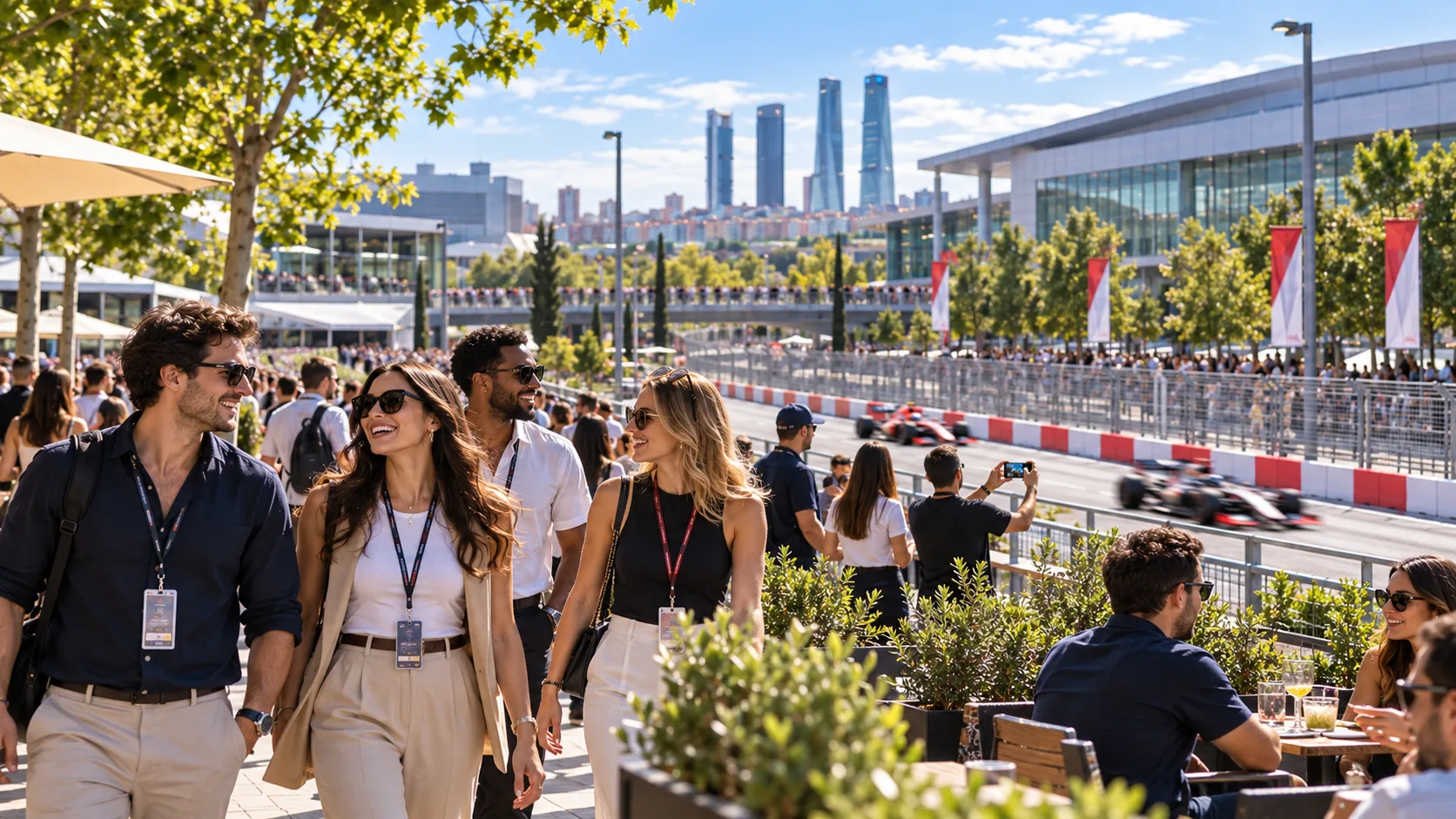
The Formula 1 Spanish Grand Prix will take place in Madrid from 11 to 13 September 2026. The race will be held at MADRING, a 5.4 kilometre circuit with 22 corners around the IFEMA Madrid exhibition complex, Corralejos and the Valdebebas expansion area in the northeast of the Spanish capital.
Madrid City Council expects total attendance of about 345,000 across the event’s three days and estimates an annual economic impact of roughly €450 million. Both figures are forecasts made before the race, not measured results. The attendance total across the three days should not automatically be read as 345,000 unique visitors.
One listing rose to more than five times its earlier price
The most striking example comes from an accommodation search reported by El País. A house with four bedrooms and six beds in Valdebebas was advertised at €17,661 for three nights from 11 to 14 September. The displayed price for another stay of three nights, from 30 August to 2 September, was €3,341.
If the booking terms and property details were comparable, the difference represents an increase of about 429%, putting the price for the race weekend at more than five times the earlier rate.
The same report cited an apartment with three bedrooms for up to seven guests. It was listed at €718 for 4 to 7 September and €4,077 for the Grand Prix weekend, an advertised increase of approximately 468%.
Advertised rates are not the same as completed bookings
These figures are asking prices, not proof that travellers paid them. Properties still visible in a search may be the listings that have not secured a booking at the requested rate.
Airbnb told El País that hosts set their own prices and often adjust them around events with high demand. The company also said that a small number of unusually expensive listings were not representative of the wider market. It did not disclose occupancy figures, describing them as commercially sensitive.
The available evidence therefore supports a narrow conclusion: some hosts near the circuit raised their advertised prices sharply for the race weekend. It does not establish the average increase across Madrid’s tourist rental market, nor does it show a citywide rise in residential housing costs.
Questions over permits add a regulatory dispute
The price surge has coincided with a dispute over tourist rentals allegedly advertised without the required authorisation. El País reported on 5 September that Socialist city councillor Antonio Giraldo filed a complaint with Madrid’s municipal activities agency concerning properties near the circuit.
City officials argue that Spain’s central government should do more to stop unlawful listings from appearing on digital platforms. The Ministry of Consumer Affairs says Madrid City Council is responsible for enforcing municipal rules and requesting the removal of listings that breach them.
Mayor José Luis Martínez Almeida said the city would continue pursuing illegally operated tourist accommodation during the Formula 1 weekend and throughout the year. Without official figures for inspections and enforcement cases around MADRING, the scale of the alleged breaches cannot yet be established.
The broader economic payoff remains unproven
A Grand Prix can generate additional spending on hotels, restaurants, transport, retail and entertainment. The net benefit, however, will depend on the actual number and origin of visitors, how much they spend, the public and organisational costs involved, and how widely the revenue reaches local businesses and workers.
High rates may benefit some property owners and booking platforms while narrowing affordable options for fans, temporary staff and residents. Even so, a handful of extreme listings cannot demonstrate that Formula 1 has pushed up Madrid’s overall housing market.
The most useful measures taken after the race will include actual occupancy, rates paid rather than advertised, visitor spending, local business revenue, public costs, transport disruption, and the number of inspections and sanctions.
The impact also reaches people working at the event
Rising prices do not affect fans alone. They can also increase costs for temporary workers, event staff, media crews and other professionals who need accommodation near IFEMA during the race weekend.
What is known and what still needs to be measured
One week before the event, the dates, circuit location and municipal attendance forecast are confirmed. It is also documented that several accommodation listings near MADRING reached exceptional prices.
What is not yet known is how many guests will pay those rates, what the final average price will be, or how much economic value the Grand Prix will ultimately generate for Madrid. For now, the most defensible conclusion is a limited one: Formula 1 weekend demand has driven some advertised prices sharply higher, while the effect on the wider accommodation and housing markets can only be assessed after the event.
Editorial note: GlobalTalent24 will update this analysis after the race, when data on attendance, accommodation occupancy and the actual economic impact become available.
The images in this article were generated using artificial intelligence.
Sources
Formula 1 · Madrid City Council · El País: prices · El País: permits · Servimedia