A new player on Swiss rails: Brussels by night train at a price that changes the travel equation
From 9 September, European Sleeper will connect Brussels and Milan three times a week, with several stops in Switzerland. Behind the attractive fares lies a larger question: how much competition can one of Europe’s best coordinated rail systems accommodate?
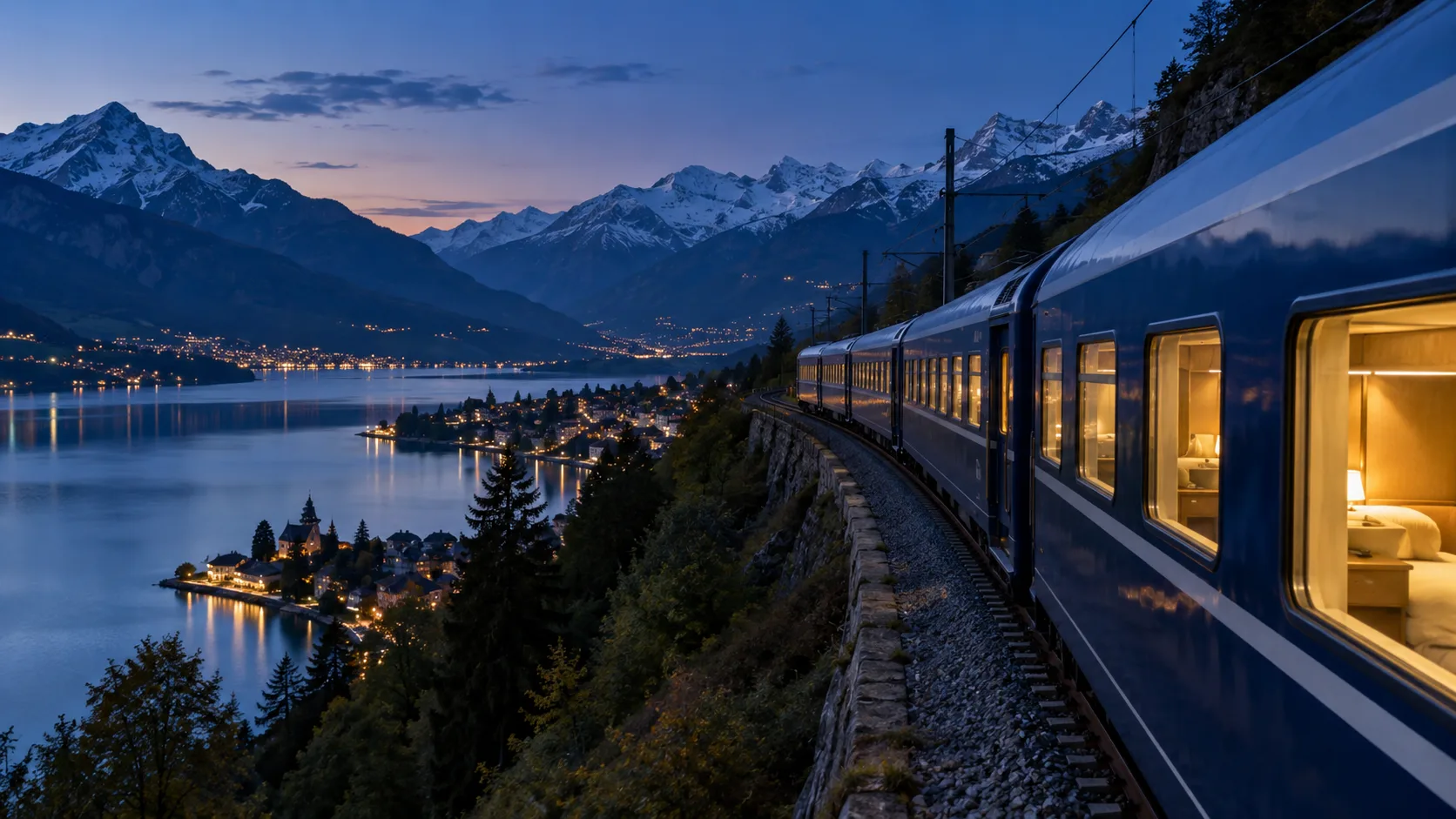
A new night train for Switzerland
Swiss rail is known for regular interval timetables, coordinated connections and an integrated fare system that lets passengers move across the country with little friction. A new factor is now entering the equation: more visible international competition.
European Sleeper launches a direct night service between Brussels and Milan on 9 September 2026, travelling via Cologne and Switzerland. For passengers, it is a new route. For the market, it is one of the clearest recent signs that private international operators could become more prominent on Swiss tracks.
Fall asleep in Switzerland, wake up in Brussels
According to the official timetable, the service will run three times a week in each direction. Trains from Brussels to Milan will depart on Monday, Thursday and Saturday nights. Return services from Milan to Brussels will leave on Wednesday, Friday and Sunday.
The initial Swiss stops are Zürich, Arth Goldau, Göschenen, Bellinzona and Lugano. The train then continues through Chiasso and Como to Milano Porta Garibaldi. SNCB International also confirms the 9 September launch and the three times weekly frequency.
Passengers travelling from mid December should consult the updated timetable. European Sleeper says that from 14 December the train is expected to stop in Aarau instead of Zürich. Travellers should therefore check the date, station and latest schedule before booking.
A fare that changes the calculation
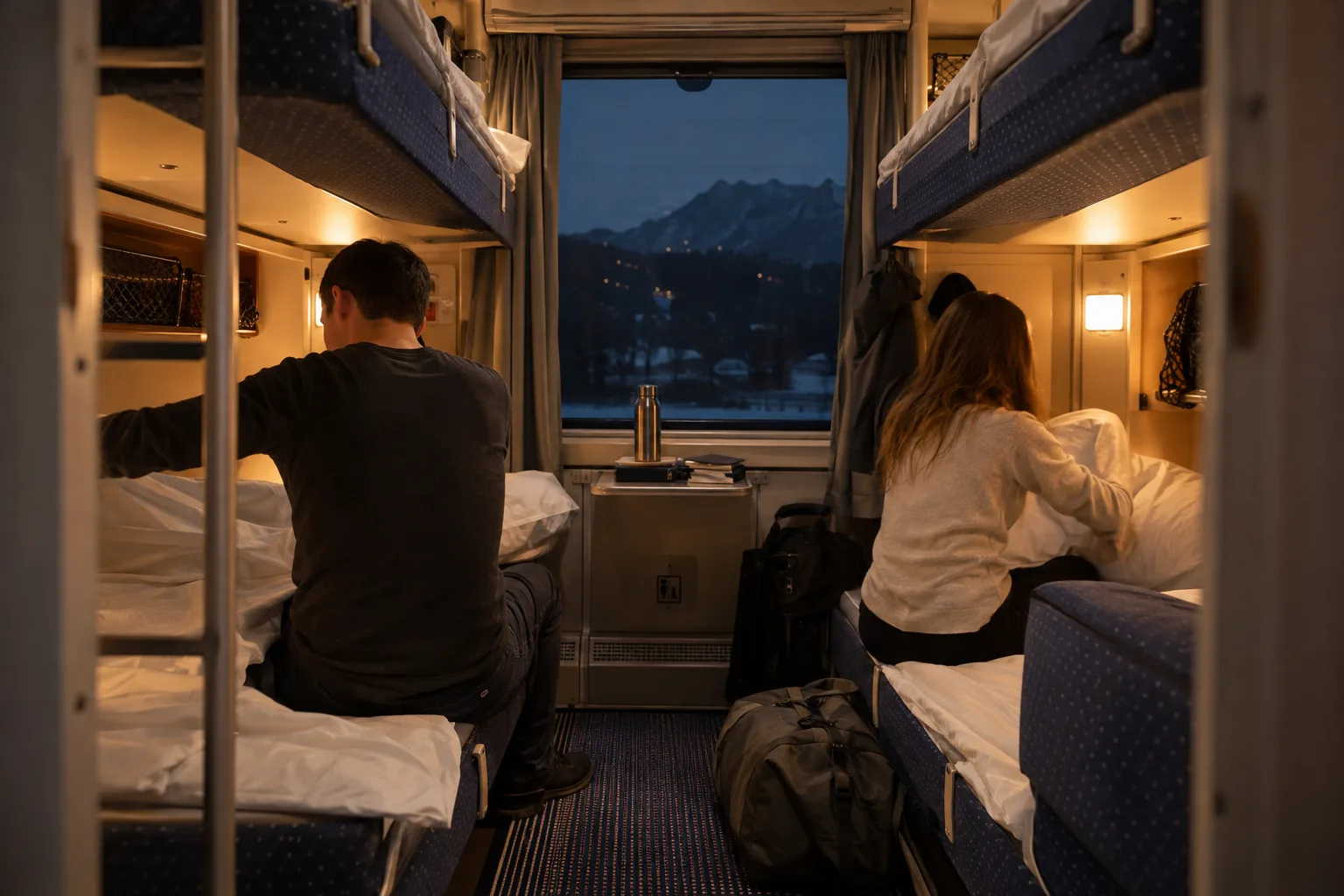
The starting fare is attracting the most attention. European Sleeper advertises places in a shared Classic compartment from 49.99 euros per person each way. The amount depends on route, date and availability. More affordable Budget seats and more comfortable sleeping options are also available. A private Classic compartment on this route is advertised from 179.99 euros.
At the Swiss National Bank reference rate published on 4 September, 0.9401 francs per euro, 49.99 euros equals roughly 47 francs. This is a snapshot, not a fixed Swiss fare. The exchange rate, booking date and specific journey can all change the final amount.
A simple comparison with flying is incomplete if it looks only at ticket prices. Boarding in the evening and arriving in the city centre the next morning can remove the cost of a hotel night and reduce airport transfers and waiting time. A night train therefore sells more than transport. It sells a different use of time.
More than a new route: a market test
For GlobalTalent24, the more interesting economic story begins where the tourism appeal ends. Private operators are looking for space between established railways, low cost airlines and the car. Their product does not have to be the cheapest or fastest on every route. It can compete when travel time becomes partly sleep time and the destination is reached in the centre of the city.
The launch of European Sleeper does not mean that the market opening proposed under Bilaterals III is already in force. This service is starting under the current legal framework. It does, however, offer a picture of the services that could become more common in a more open European rail market.
Bilaterals III: controlled opening, not full liberalisation
The updated Land Transport Agreement provides for a controlled opening of international rail passenger transport. In future, EU railway companies should be able to offer cross border services to Switzerland independently. Swiss companies would receive the same opportunity in the European Union.
Bern is tying this opening to clear safeguards. Foreign operators must comply with Swiss pay and working conditions on Swiss sections of track. New services can be introduced only when train paths are available. Domestic regular interval passenger services and freight retain priority. If an international train also carries passengers between Swiss stations, its operator may be required to join the Swiss fare system, including recognition of the GA Travelcard and Half Fare Travelcard.
This is not full liberalisation. Switzerland wants to permit additional services without weakening the coordination that supports the quality of public transport. Existing SBB partnerships with DB, SNCF and Trenitalia should also remain possible.
What could change for SBB and passengers
The Federal Council submitted the full Switzerland EU package to Parliament on 13 March 2026. On 4 September, the Foreign Affairs Committee of the Council of States completed its preliminary consideration of the stabilisation section and backed the central federal decree by 9 votes to 3, with one abstention. Business item 26.023 is due to be considered by the Council of States during the autumn session. The final institutional framework is therefore not yet in force.
If the opening is implemented, passengers could gain more direct international services, greater choice and stronger pressure on prices and quality. SBB and its partners would face a new form of competition. The state would also have a harder balancing act: allowing market access while protecting the regular interval timetable, social standards, fare integration and freight capacity.
Around 47 francs is only the beginning
A headline promising Brussels for around 47 francs is easy to notice, but it tells only the first part of the story. The more important development is that another international operator will run regularly through Switzerland while the country decides the rules for future market entry.
European Sleeper is therefore more than another night train. The route shows what the next phase of European rail could look like: more direct services, more competition and a travel calculation that considers the ticket, the hotel and time together.
Image note: the illustrations used in this article were created with artificial intelligence. They are for illustrative purposes and do not depict a specific train or a real travel situation.
Official sources
European Sleeper: Milan to Brussels route, fares and comfort classes
European Sleeper: official 2026 timetable
SNCB International: European Sleeper to Zürich and Milan
Federal Office of Transport: land transport factsheet
FDFA: contents of the Switzerland EU package
Swiss Parliament: business item 26.023 Bilaterals III